.png)
Mumbai's Dabbawalas A Deep Dive into the Tradition and Community Behind the Iconic Lunch Delivery System

Mumbai’s dabbawalas are famous worldwide for delivering thousands of home-cooked meals daily with remarkable accuracy and speed. Yet, the story behind this system goes far beyond lunchboxes. It is a story of community, culture, and a unique tradition that has thrived for over a century. This post explores the people and culture that power this extraordinary delivery network, revealing how their dedication and values keep Mumbai’s dabbawalas running like clockwork.

The Origins of the Dabbawala Tradition
The dabbawala system began in the late 19th century when a Parsi banker in Mumbai requested a reliable way to get home-cooked meals delivered to his workplace. Over time, this simple idea grew into a vast network of delivery men who transport lunchboxes from homes to offices across the city. The system relies on a complex coding system and a strict schedule, allowing dabbawalas to deliver thousands of meals daily with an error rate of less than one in six million.
This tradition is deeply rooted in Mumbai’s working-class culture. Many dabbawalas come from the same communities, passing down the job through generations. Their work is not just a means of livelihood but a source of pride and identity.
The People Behind the System
Dabbawalas are mostly semi-literate men from rural Maharashtra who migrate to Mumbai for work. Despite limited formal education, they have mastered a highly efficient logistics system based on teamwork, discipline, and trust. Each dabbawala knows his role precisely, whether it is collecting lunchboxes, sorting them at railway stations, or delivering them to offices.
The community aspect is strong. Dabbawalas often live in the same neighborhoods, share meals, and support each other like family. Their workday starts early, and they rely on Mumbai’s local trains to move quickly across the city. The physical demands are high, but the camaraderie and shared purpose keep them motivated.
The Culture of Precision and Trust
The dabbawala system operates without modern technology like GPS or smartphones. Instead, it uses a simple but effective coding system printed on each lunchbox. This code indicates the destination, recipient, and delivery route. The system depends on human memory, communication, and a shared understanding developed over decades.
Trust plays a crucial role. Customers trust dabbawalas to deliver their meals on time and intact. Dabbawalas trust each other to handle their parts of the process carefully. This mutual trust has helped the system survive challenges such as Mumbai’s monsoon floods, railway strikes, and the rapid growth of the city.
How the System Works Day-to-Day
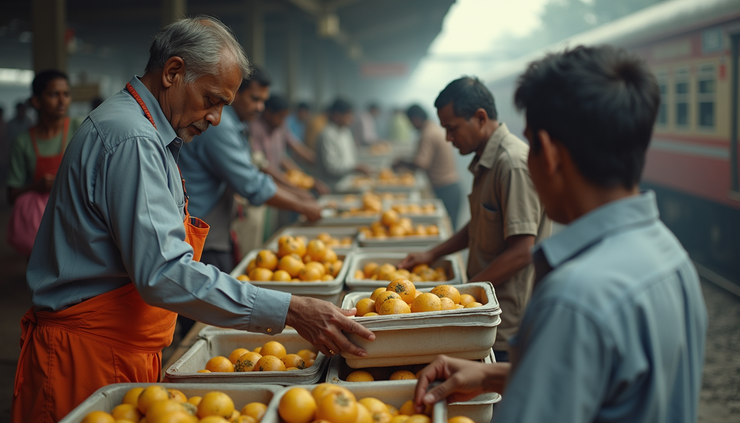
Each morning, dabbawalas collect lunchboxes from homes, often by bicycle or on foot. They bring these boxes to railway stations, where they are sorted and loaded onto trains. At the destination station, another group of dabbawalas takes over, delivering the lunchboxes to offices or schools.
After lunch, the process reverses. Empty boxes return to homes by evening, ready for the next day. The entire operation runs like a well-oiled machine, with clear roles and timing.
Key Features of the System
Simple coding system: Uses colors, numbers, and symbols to identify lunchboxes.
Teamwork: Groups of dabbawalas handle specific routes and tasks.
Punctuality: Deliveries happen within a strict time window.
Physical endurance: Many dabbawalas walk or cycle long distances daily.
Community support: Strong social bonds help maintain morale and reliability.
Challenges and Adaptations
Despite its success, the dabbawala system faces challenges. The rise of food delivery apps and changing work patterns threaten its traditional model. However, many dabbawalas have adapted by partnering with technology companies or expanding their services.
The COVID-19 pandemic also impacted their work, with many offices closed and fewer lunch deliveries. Still, the community showed resilience by finding new ways to serve customers, such as home deliveries.
What Makes the Dabbawala System Unique
The dabbawala system stands out because it combines tradition with efficiency. It is a rare example of a low-tech solution that outperforms many high-tech logistics companies. The system’s success comes from:
Human connection: Personal relationships between dabbawalas and customers.
Cultural pride: A shared sense of purpose and identity.
Simplicity: Clear roles and a straightforward process.
Reliability: Consistent delivery times and minimal errors.
Lessons from the Dabbawalas
The story of Mumbai’s dabbawalas offers valuable lessons for businesses and communities worldwide:
Trust builds strong systems: When people trust each other, complex tasks become manageable.
Simplicity can beat complexity: Sometimes, simple methods work better than complicated technology.
Community matters: Shared values and support create resilience.
Adaptability is key: Even traditional systems can evolve to meet new challenges.
The dabbawalas show how a group of dedicated individuals can create an efficient, reliable service that supports thousands of people every day.
Mumbai’s dabbawalas are more than just lunch delivery men. They represent a living tradition of community, trust, and hard work. Their system continues to inspire people around the world with its simplicity and effectiveness. Next time you see a dabbawala cycling through Mumbai’s streets, remember the rich culture and dedication behind that humble lunchbox. Their story encourages us to value human connection and the power of working together.

Comments